

Today Regi gets your Airbnb and Booking reservations through the iCal calendar. It works, but it only brings dates. No guest name, no way to reach the guest. So you still send the check-in link yourself.
We’re building the next version of Regi to remove that step. And a few more. This post explains what we’re building, how it will change your day, and what it won’t do yet.
Reservations arrive on their own, and complete
The iCal connection gives you a gap in the calendar: check-in, check-out, and little else. Regi has to guess how many travelers are coming and doesn’t know their names.
With the direct connection, every Airbnb or Booking reservation arrives with what the platform knows: the guest’s name, the number of people, the dates and which channel it came from. If the guest changes dates or headcount, Regi sees it. If they cancel, Regi sees that too.
That removes the checking. No more opening Airbnb to see who’s coming on Thursday.
One check-in link per reservation, sent by Regi
Today the check-in link belongs to your property. You share it with each guest and they open it. We explained that in the check-in link post.
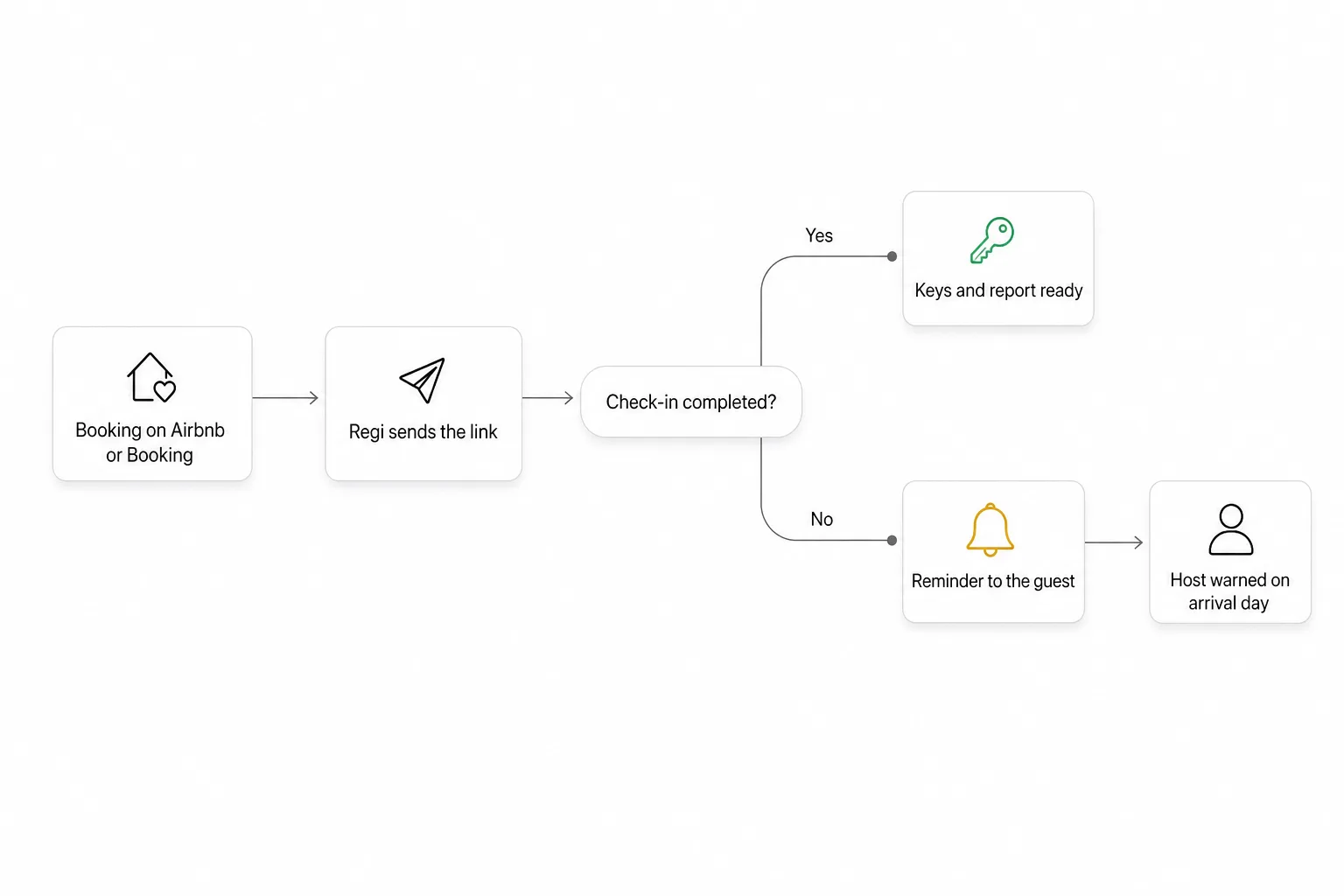
In the new version, each reservation gets its own link. It comes pre-filled with the dates, the number of people and the lead guest’s name. It only works for that reservation and stops working after check-out.
And you don’t send it. Regi will send it to the guest through the same Airbnb or Booking chat you already use, in their language when the platform tells us (Spanish, English, French or German). If the guest doesn’t finish the check-in, Regi will remind them before arrival.
On each reservation you’ll see whether the message was sent, whether the guest opened it and whether they finished. You’ll be able to change the message text per property and turn the sending off if you’d rather do it by hand.
We only warn you when it matters
Right now Regi sends you a warning if someone arrives tomorrow or today without a report. It’s useful, but sometimes it’s early: the guest was going to do it that afternoon.
With automatic guest reminders, that warning moves. Regi nudges the guest first. You’re only warned on arrival day, and only if the report is still incomplete.
The warning will carry what you need to act: which reminders went out, whether they arrived, and a button to resend the link or fill in the report yourself on the guest’s behalf.
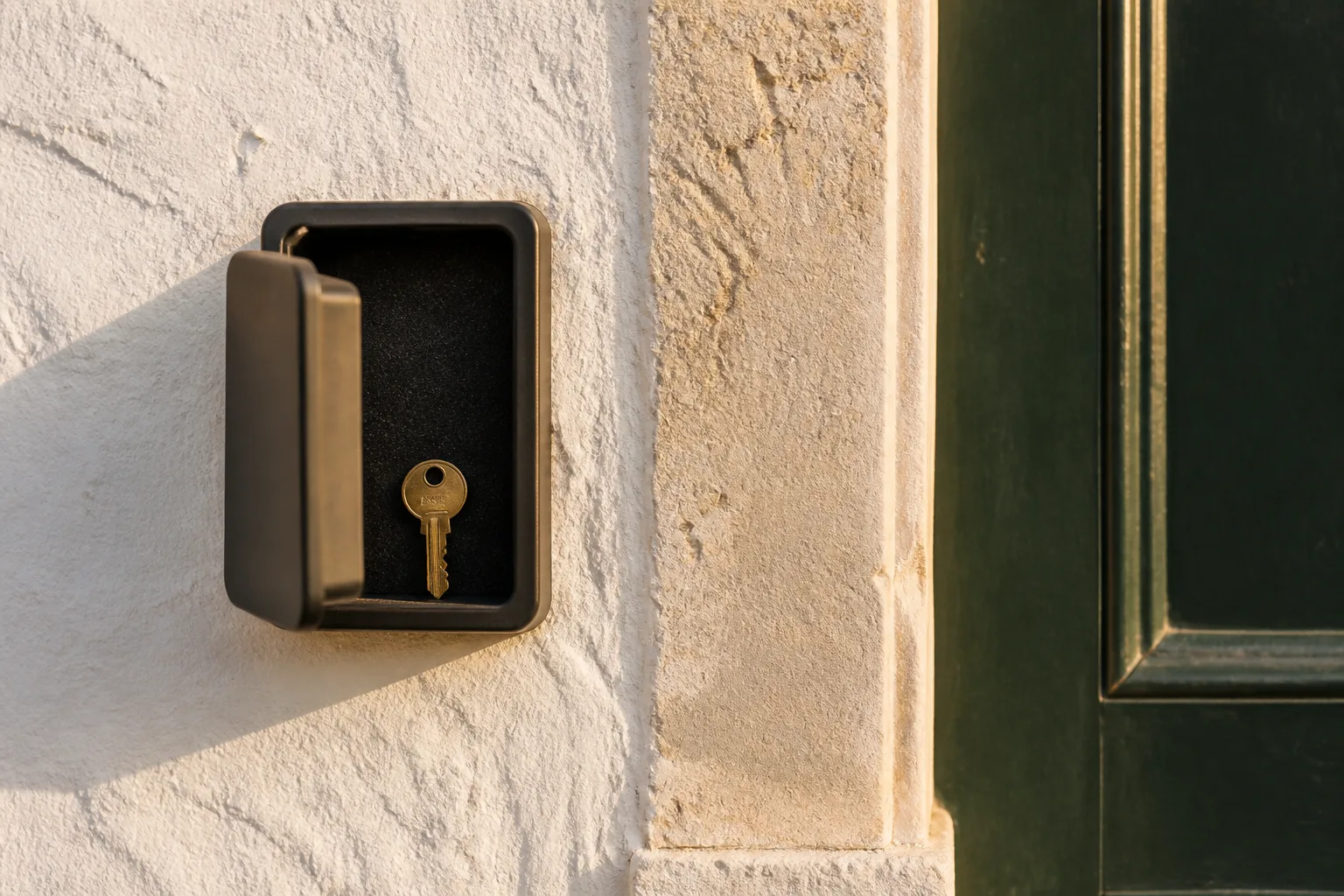
Keys are shown after check-in
Many hosts put the door code in the welcome message. Before check-in, before the report, sometimes before knowing who’s walking in.
In the new version you’ll be able to store each property’s access details in Regi: the door or lockbox code, where to pick up the key, the Wi-Fi, how to find the entrance. Regi will only show them to the guest once they’ve completed check-in, inside their own link, and only in the days around arrival.
If the reservation is cancelled, the details are withdrawn. After check-out, too. And you’ll be able to set a different code for one specific reservation, for example if you rotate it every stay.
So check-in stops being a favor you ask for. It’s the step before the key.
A cancellation cancels the report
If a guest cancels on Airbnb or Booking, today Regi warns you and you decide what to do with the report. That’s explained in the calendar post.
With the direct connection, a cancellation is certain: it comes from the platform, not from a gap that vanished. So Regi will cancel the report at SES.Hospedajes (Spain’s traveler registry) without asking, withdraw the link and the access details, and stop sending reminders.
If SES.Hospedajes doesn’t answer the first time, Regi will try again. If it can’t in the end, you’ll see it in the reports list with a retry button, and Regi will let you know.
A date change is not a cancellation. It updates the report, it doesn’t cancel it.
Your prices and your calendar, in one place
This is the part that turns Regi into something new: a channel manager.
Today your prices live on Airbnb and on Booking, one by one. In the new version they’ll live in Regi. For each property you’ll have a calendar where you set, by date, the nightly price, whether it’s open or closed, the minimum and maximum stay, and whether guests can arrive or leave that day. Whatever you change there, Regi pushes to Airbnb and Booking.
And when a booking comes in through one channel, Regi closes those dates on the other. That’s what prevents double bookings. Today, with iCal, that depends on the platforms reading each other’s calendars, with a delay.
One important detail. When you connect a property, Regi will first read the prices and availability you already have on the platform and show them to you. Nothing goes live until you confirm them. Activating the connection means Regi starts sending, and we don’t want an empty calendar to close your listing or change its price.
Connecting will be yours to do, without writing to us
Connecting Airbnb will mean signing in to Airbnb with your account and authorizing. Connecting Booking.com will be a step in your Booking extranet plus your hotel ID; we’ll guide you through it, because that step sits behind your own two-factor verification.
In both cases, you remain the owner of the relationship with the platform. You can revoke the permission on Airbnb or Booking whenever you want.
And later: hotels and hostels
Everything above is designed for single-unit properties: an apartment, a house. That’s what ships first.
But we’re building it so a small hotel or a hostel fits without redoing anything: room types, how many units of each (in a hostel, the beds in a dorm), and a rate per type. A booking of one double room will only reduce availability for doubles, on every channel. That comes later, as new screens on the same foundation.
What this doesn’t do (yet)
- It isn’t available yet. We’re building it, and this post is a heads-up about what’s coming, not a launch. We’re not giving a date because we don’t have one locked in.
- The iCal connection isn’t going away. It stays for anyone who doesn’t connect directly or uses other platforms.
- If you already use another channel manager, you won’t be able to connect Airbnb or Booking to Regi as well: a platform only accepts one at a time. In that case you stay on iCal.
- Only Airbnb and Booking.com at first. Other channels later.
- The message goes through the platform’s chat, not by email. The email address Airbnb and Booking give for a guest is a relay address that doesn’t always deliver; we’re not relying on it.
- It doesn’t change what’s reported to SES.Hospedajes. The report carries the same data and the same deadlines. What changes is who moves the paperwork, not the paperwork.
- The price of this mode isn’t decided. What you pay today doesn’t change because of anything in this post.
Frequently asked questions
Do I need to do anything now? No. When it’s ready, you’ll see the option to connect in Regi. Until then, everything stays the same.
Will I lose what I already have with iCal? No. The reservations already in Regi stay. The only thing we’ll prevent is having the same reservation twice, once from iCal and once from the direct connection.
Will Regi change my prices when I connect? Not without you seeing them. Regi reads what you already have on the platform, shows it to you and waits for your confirmation before activating anything.
What if I don’t want Regi messaging my guests? You’ll be able to turn automatic sending off per property and keep sharing the link yourself, as you do now.