

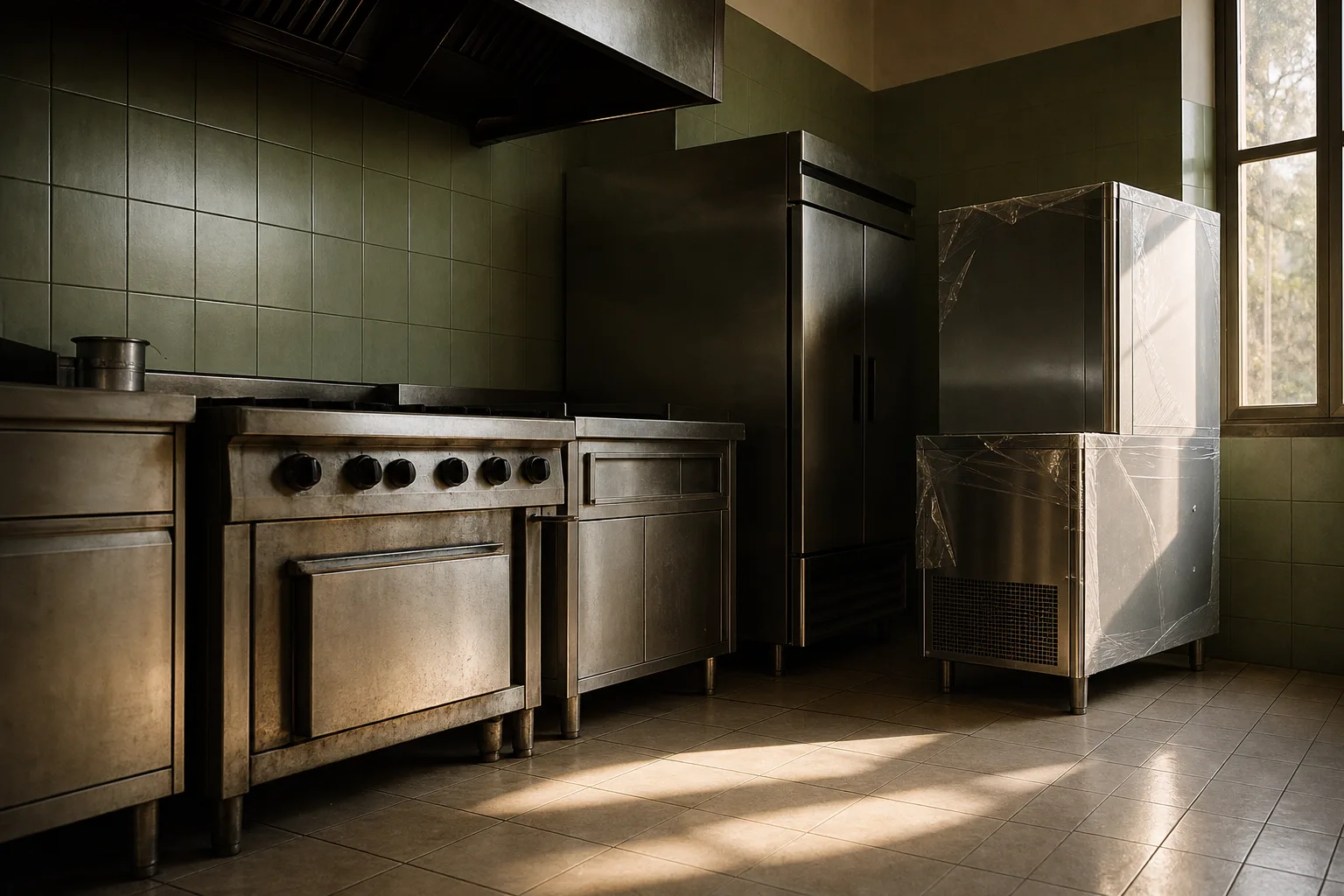
Royal Decree 638/2026 of 29 July launched a €15 million national scheme so that hotels, tourist apartments, campsites, restaurants and bars in Spain can replace equipment with lower energy consumption models. The grant ranges from €5,000 to €11,000 per establishment, VAT excluded, and can cover up to 100 % of the eligible cost.
The window opened on 5 August and closes on 30 September 2026 at 15:00, but that date is not what decides who gets paid. These grants are awarded in order of arrival of complete applications until the budget runs out, and the Spanish Ministry’s own aid portal published that 3,137 applications worth €30,359,552.06 had been received up to 24 August: more than double the available credit.
That does not make applying pointless, but it completely changes how the application should be prepared. This article covers what the scheme funds, who qualifies, which paperwork mistake sends you to the back of the queue, and how to decide whether joining the reserve list is worth it.
What Royal Decree 638/2026 actually funds
This is not a general refurbishment scheme. It funds the replacement or renewal of four families of equipment with more energy-efficient models:
- Domestic appliances.
- Industrial catering machinery.
- Air-conditioning terminal units.
- Awnings and parasols.
The operative word is “replacement”. Buying an extra oven to expand the kitchen does not qualify; swapping the oven you already have for a lower-consumption one does. You must evidence the energy saving compared with the replaced unit and, as a general rule, the removal of the old equipment by a licensed waste manager.
Expressly excluded:
- Equipment running on fossil fuels, natural gas included.
- Refurbished, used or second-hand equipment.
- Swapping conventional lighting for LED, which is not among the eligible actions.
- VAT, which is not treated as an eligible cost. If you also manage holiday lets, do not confuse this with VAT on tourist flats, which is a separate matter.
One borderline case comes up constantly: replacing only the motor or compressor of a unit. The administration does not rule it out, but it does not guarantee it either. Each case is assessed by the technical team reviewing the file, based on the energy improvement evidenced.
How much you can receive, and the limits
| Item | Amount or limit |
|---|---|
| Minimum grant | €5,000 per establishment, VAT excluded |
| Maximum grant | €11,000 per establishment, VAT excluded |
| Intensity | Up to 100 % of the eligible cost |
| Total budget | €15,000,000 (€1 million in 2026, €14 million in 2027) |
| De minimis ceiling | €300,000 per undertaking over three years |
| Grants per establishment | One only |
Three points that are frequently misread:
- “Up to 100 %” is not automatic approval. It means the grant can cover the whole eligible cost within the minimum and maximum per establishment, not that every application submitted will be approved.
- One establishment, one grant. The same company or self-employed person can apply for several establishments, but each goes in separately and must meet the requirements on its own.
- Incompatibility is per cost, not per project. These grants are incompatible with any other public funding covering the same eligible costs. They can coexist with aid for different actions or costs.
The de minimis regime also requires declaring aid received in the current and two previous financial years, subject to the €300,000 ceiling of Regulation (EU) 2023/2831.
Who can apply: CNAE 55 and 56
Applicants can be individuals, legal entities, companies, communities of property (comunidades de bienes) and civil partnerships that are registered in Spain’s Census of Entrepreneurs, Professionals and Withholders, hold one or more hospitality establishments in Spain, and carry out an activity under these codes:
| Division | Codes included |
|---|---|
| 55. Accommodation services | 55.10 hotels and similar · 55.20 tourist and other short-stay accommodation · 55.30 campsites · 55.40 accommodation intermediation · 55.90 other accommodation |
| 56. Food and beverage services | 56.11 restaurants · 56.12 food stalls · 56.21 event catering · 56.22 other catering · 56.30 beverage serving · 56.40 food and beverage intermediation |
The inclusion of division 56 matters more than it looks: a hotel with its own restaurant, a campsite with a bar or a rural property serving meals may have activity in both divisions. What counts is the CNAE code of the holder of the establishment the application covers.
Self-employed workers qualify, with one exception: not those acting solely as collaborating family members of the establishment’s holder. Applicants must also declare that they hold a valid legal title to run the activity at that establishment, and be up to date with the Spanish tax authority and social security in order to be paid.
The point that decides everything: queue order and the reserve list
This is a direct grant, not a competitive call. Nobody compares your project against anyone else’s or scores it. Applications are processed in order of submission of complete documentation until the budget is exhausted or the window closes.
That produces the single most important detail of the whole scheme, and the one that costs the most money to ignore:

What the reserve list means today
Once the credit is exhausted, later applications join a provisional reserve list. Those files are only processed if budget becomes available again through waivers, withdrawals, revocations or other circumstances set out in the rules.
With 3,137 applications and €30,359,552.06 declared up to 24 August against a €15 million budget, the honest reading is that anyone applying now will most likely land on that reserve list. Two caveats before drawing conclusions:
- Requested is not awarded. The credit is legally exhausted by award decisions, not by the volume of applications registered. Some of those files will fall away for failing requirements, for withdrawal or for not answering a correction request.
- Early closure is published. If the budget runs out before 30 September, the window closes early and that is published on the aid portal. Check the status of the call on the same day you intend to apply.
When it is worth applying
It comes down to one specific question: were you going to make that replacement anyway?
- If a unit is already at the end of its life and the investment was decided, applying makes sense. The marginal cost is the paperwork, and the reserve list is a free option on a possible surplus.
- If the grant is the only thing justifying the purchase, do not bring the investment forward on the assumption you will be paid. Approval is not guaranteed and the execution period afterwards is very short.
To decide with numbers rather than intuition, use the same method you would for any other investment in the property: annual energy saving, payback period of the new unit, and what that calculation looks like if the grant never arrives. The logic is worked through in how to calculate the profitability of your holiday rental.
Eligible costs, including the 4 % and 7 % caps
Beyond the equipment itself, the scheme accepts the costs needed to put it into service:
- Purchase of equipment and materials.
- Works and installation needed to commission it, where applicable.
- Removal and correct waste management of the replaced unit.
- Technical fees required to carry out the work.
- Application management costs, capped at 4 % of the costs inherent to the equipment replacement.
- Costs of preparing and filing the justification, capped at 7 %.
Having advisory fees treated as an eligible cost matters in such a document-heavy scheme, but both caps are calculated on the equipment cost, not on the grant awarded. And everything must be properly invoiced and evidenced.
How to evidence the energy saving
This is the technical requirement that complicates most files, and it works in two scenarios:
| Situation | How it is evidenced |
|---|---|
| The new unit has an energy label | An improved energy rating compared with the replaced unit |
| The unit has no energy label | An expert technical report comparing the technical characteristics of the replaced and the new unit |
| Awnings and parasols | An expert technical report, since they generally carry no energy labelling |
Two official clarifications worth knowing before commissioning anything:
- The expert report must be issued by a chartered industrial technical engineer independent from the supplier or installer, precisely to guarantee that the assessment is independent.
- The report is not mandatory when you apply. However, if you want its cost treated as an eligible expense, you must submit the corresponding pro forma invoice or quote with the application.
Whether the evidence is sufficient is assessed by the case officer during processing, so a generic report, or one written by the supplier itself, is an avoidable source of trouble.
Full timeline, from spending to payment
| Milestone | Deadline |
|---|---|
| Eligible costs | From 1 March 2026 |
| Applications | From 5 August (10:00) to 30 September 2026 (15:00), early closure possible |
| Correction of defects | 10 working days from the request |
| Decision | Maximum 6 months from the date the application is complete; silence means rejection |
| Acceptance | 10 working days to decline; without an express waiver it is deemed accepted |
| Execution | 1 month from notification of the award decision |
| Justification | 15 calendar days from the end of the execution period |
| Payment | A single payment, after the justification is checked and obligations verified as up to date |
Two practical consequences. First: because costs are eligible from 1 March 2026, you can apply for a replacement already carried out, providing the invoice and proof of payment; if it has not happened yet, you submit a detailed quote from the installer.
Second: one month of execution is very little. If the award arrives and the equipment has a six-week lead time, you have a problem. Agreeing delivery dates with the supplier in writing before applying is the cheap way to avoid it. And if something unforeseen comes up, a modification of the award decision must be requested at least 15 calendar days before the execution period ends.
Swapping one unit for another of equivalent functionality and performance, on the other hand, does not require modifying the decision, as long as the purpose is maintained and the authorised amount is not exceeded.
Checklist before submitting
- Check the aid portal on the same day to confirm the call is still open and no early closure has been published.
- Verify your CNAE code sits within divisions 55 or 56 and that you hold the establishment.
- Confirm the action is a replacement rather than an additional purchase, and that the new unit does not run on fossil fuels.
- Gather the invoice and proof of payment if the work is done, or a detailed quote if it is not.
- Write the descriptive report using the official template: applicant details, type of activity, description of the equipment, need for the investment, status of the work, costs and evidence of the energy saving.
- Plan how you will evidence the saving: energy label or an expert report by a chartered engineer independent from the supplier.
- Arrange removal of the old unit by a licensed waste manager and keep the environmental paperwork.
- Check that you are up to date with the tax authority and social security.
- Declare your de minimis aid for the current and two previous financial years.
- If an adviser represents you, formalise the representation template first: the responsible declaration and the report must be signed by the beneficiary.
- Use the official templates and check the latest version of the Applicant Guide, which may be updated during the call.
- Submit a complete file first time. It is the only variable in the queue you actually control.
And if you miss out, the equipment keeps consuming
An oversubscribed scheme does not change the underlying problem: old equipment costs money every month. If the file ends up on the reserve list, two routes do not depend on an administrative decision.
The first is financial: the investment is still depreciable and the energy saving is real, grant or no grant. The second is scheduling. Concentrating works and replacements in the lowest-occupancy months reduces the opportunity cost of closing a kitchen or part of the property, which usually weighs more than the price of the unit itself. If your low season is long, it is worth treating it as a maintenance window rather than only as a revenue problem: there are concrete tactics in how to tackle tourism seasonality.
Frequently asked questions
Can I apply if I already bought the machinery this year?
Yes. Purchases made from 1 March 2026 are eligible, provided the rest of the requirements are met. In that case you submit the invoice and proof of payment instead of a quote.
I have three tourist apartments under the same tax number. How many grants can I request?
One per establishment, through separate applications. Each establishment can only receive one grant, and the overall de minimis ceiling of €300,000 per undertaking over three years still applies.
Does switching to LED lighting qualify?
No. Replacing conventional lighting with LED is not among the eligible actions. The scheme is limited to domestic appliances, industrial catering machinery, air-conditioning terminal units, awnings and parasols.
Is it worth applying if the budget is already committed?
If the investment was decided anyway, yes: the provisional reserve list can be activated by surpluses from waivers, withdrawals or revocations, and the cost of trying is the paperwork. What you should not do is bring forward a purchase you would not make without the grant.
What if I am awarded the grant and the supplier is late?
The execution period is one month from notification of the award. Where there are justified unforeseen circumstances, a modification of the decision can be requested, but under a strict condition: at least 15 calendar days before that execution period ends.
Sources
- Royal Decree 638/2026 of 29 July, which regulates these direct grants
- Spanish Ministry of Industry and Tourism aid portal: applications and status of the call
- Aid portal: official frequently asked questions
- Aid portal: guides and standard templates
- Commission Regulation (EU) 2023/2831 on de minimis aid